Boat Ramps Nearby
How to launch a boat from a trailer
Launching a boat comes down to a short checklist done in the right place. Do the prep in the staging area, not on the ramp. Back down slowly until the stern floats, set the parking brake, get the boat off the trailer with a line in hand and move your rig to the parking lot right away. A well-prepared crew is in and out of the lane in a few minutes, which is what everyone waiting behind you hopes for.
The steps below follow the launch guidance from Discover Boating (the boating industry's education site) and state natural resources agencies, linked at the end. You can find any of the 8,558 public ramps on our map.
Before you leave home
Check the ramp before the trip if it is new to you. Steep ramps, short docks and shallow water at the end are much easier to handle when you know about them. If you are new to trailering, pick a quiet weekday morning for your first launches. Busy Saturday mornings at a popular lake are not the place to practice.
Many ramps charge a fee or need a pass. City and county ramps, state parks and Army Corps of Engineers lakes all set their own rules. Pay when you arrive, before you start prepping. Our guide to launch fees and permits covers the common cases.
1. Prep in the staging area
Pull into the staging or prep area next to the ramp, not into the launch lane. Work through the list there:
- Drain plug in. The forgotten plug is the classic ramp mistake. Check it twice.
- Key in the ignition. Turn it to check the battery, but do not crank the engine.
- Transom straps off. Remove the tie-down straps at the back of the boat. Leave the winch strap and safety chain on the bow for now.
- Lines on. Attach a bow line and a stern line, coiled and ready to hand to someone on the dock.
- Fenders out on the side that will touch the courtesy dock.
- Trailer lights unplugged. Hot bulbs and cold water do not mix.
- Gear loaded. Life jackets, cooler, rods and bags go in the boat now, not while you block the ramp.
Small things that save a launch
-
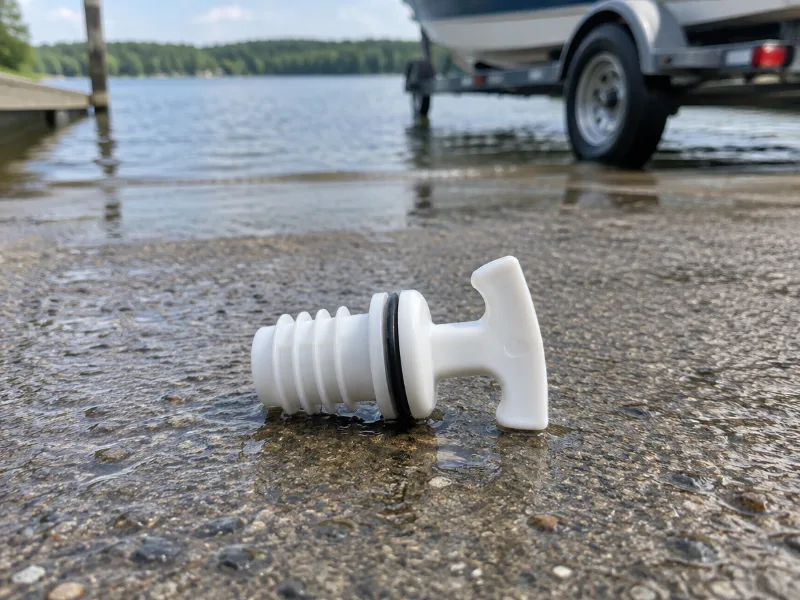 Illustration Bestseller Attwood 7524A7 snap-handle drain plug The forgotten drain plug is the classic ramp mistake. A spare in the glove box saves the day. View on Amazon
 -
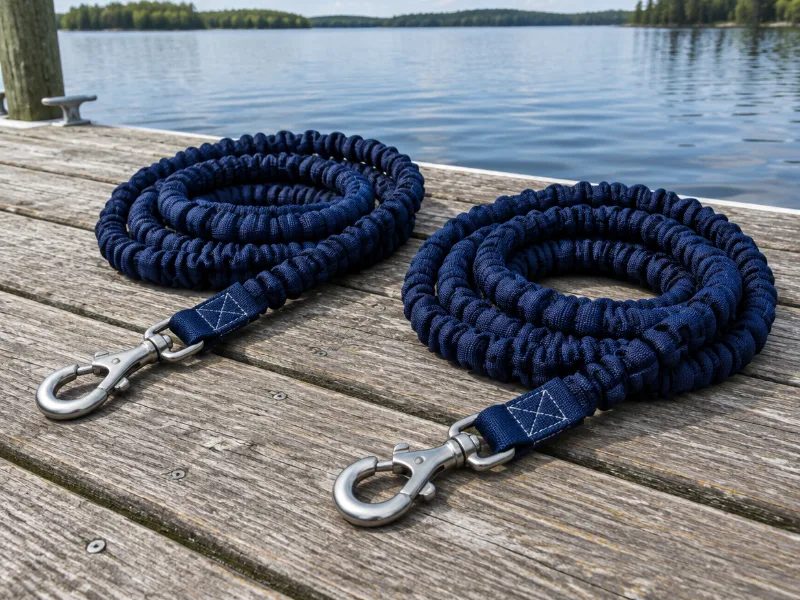 Illustration Top pick Bungee dock lines with quick connect, shock absorbing Clip on in seconds while your partner parks the trailer. The bungee keeps the boat off the dock in wakes. View on Amazon
 -
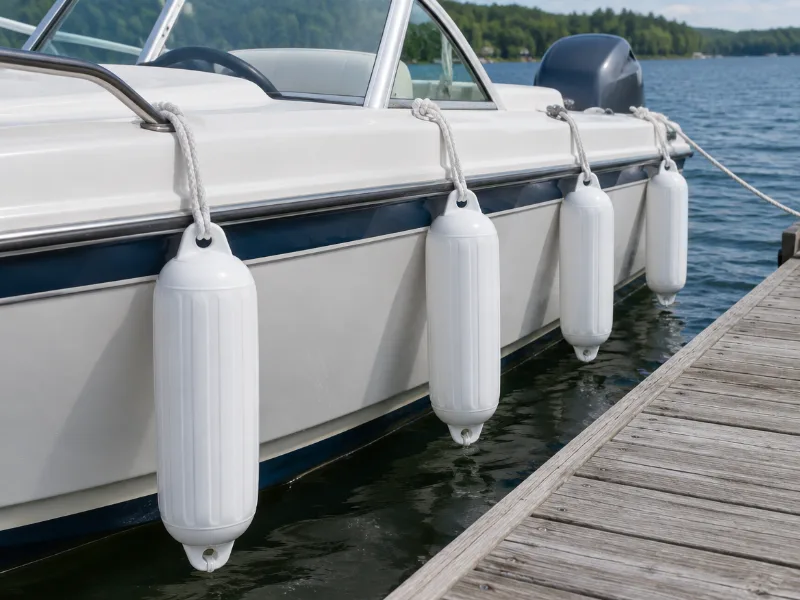 Illustration Boat fender 4 pack with ropes Hang them before you reach the courtesy dock. Busy launch docks are where most scratches happen. View on Amazon
We haven't tested these ourselves; we chose them by size and specs. As an Amazon Associate we earn from qualifying purchases, at no extra cost to you. Check the current price on Amazon.
2. Back down the ramp
When it is your turn, line up straight with the lane and back down slowly. Slow is easier to correct: if the trailer starts to drift, pull forward a little and straighten out. Put your hand at the bottom of the steering wheel; the trailer then goes the way you move your hand.
Stop when the stern of the boat starts to float. If it does not float, back in a little deeper. State agencies in Minnesota and Michigan point out that you only need enough water to float the boat, not to sink the trailer.
Shift into park and set the parking brake before anyone gets out of the driver's seat. On a wet, slippery ramp that brake is what keeps your vehicle out of the lake.
3. Get the boat off the trailer
Lower the outboard or sterndrive once the boat is in the water, and start the engine while the bow is still hooked to the winch. Running a motor out of the water can ruin the water pump. When the engine runs smoothly, loosen the winch strap and unhook it from the bow eye.
Now either back the boat off under power or push it off and walk it along the dock with the lines. Move it as far down the dock as you can, so the next boat has room. Then drive the vehicle and trailer to the parking lot straight away. Plug the trailer lights back in once you are parked.
How to launch a boat alone
Solo launching works with a bit of planning. Discover Boating describes three common methods:
- Line to the trailer. Tie a long bow line, about 25 feet, to the trailer. Back in until the boat floats off, pull forward slowly and the line drags the boat to the shore or dock. Park, walk back and tie up properly.
- Line to the dock. Run a line from a midship cleat to a piling farther down the dock. When the boat floats free, it swings to the dock and stays there.
- Step from the trailer. With one line attached to both cleats, use the trailer fender as a step onto the dock, then lead the boat off by hand.
Whichever you pick, keep the boat tied to something at every moment. A boat drifting off the trailer while you park is the most common solo mishap.
Mistakes that slow down the ramp
- Doing the prep in the launch lane instead of the staging area
- Forgetting the drain plug
- Leaving the trailer lights plugged in
- Backing in too fast and jackknifing the trailer
- Getting out of the vehicle without the parking brake on
- Starting the engine before it is in the water
- Leaving the boat at the courtesy dock for a long time while the crew shops for snacks
Ready for the end of the day? Our step-by-step guide on loading a boat on a trailer covers the way back.
For the trailer
-
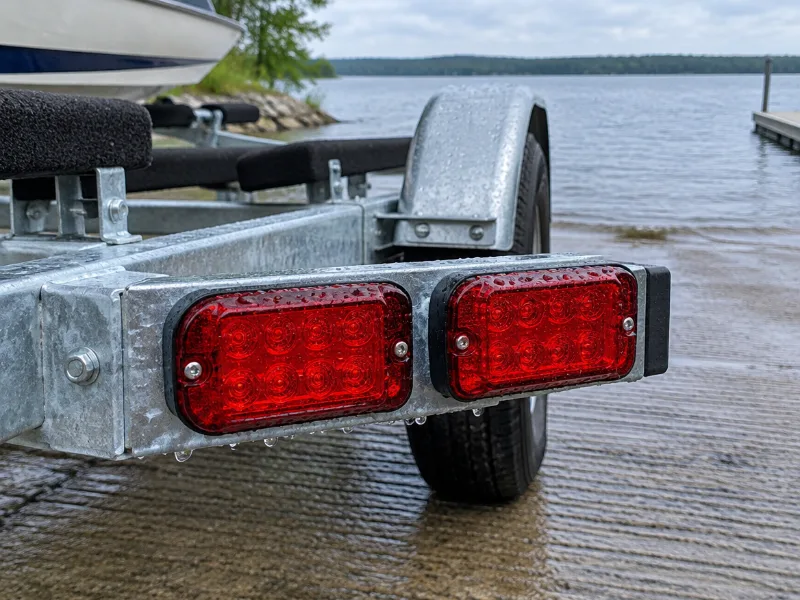 Illustration Partsam 12V submersible LED trailer lights Bulb lights die after a few dunks at the ramp. Sealed LEDs survive backing into the water. View on Amazon
 -
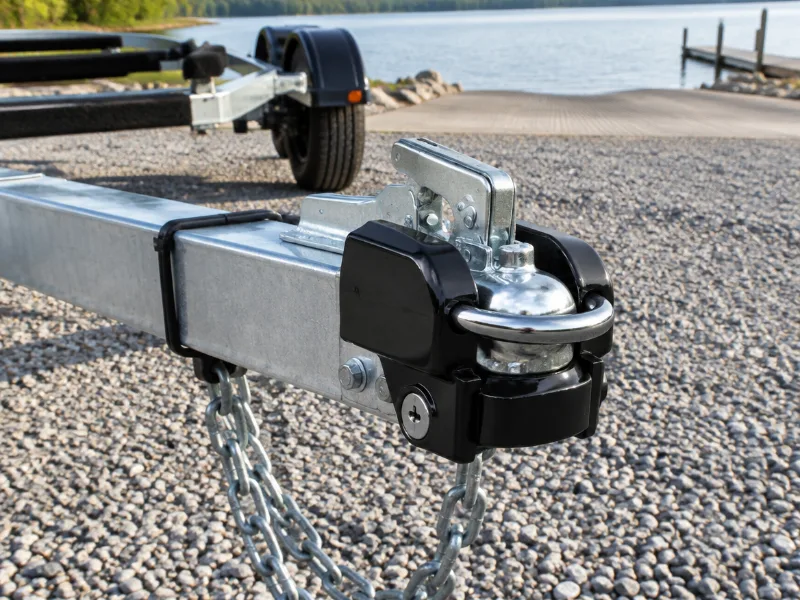 Illustration Master Lock trailer coupler lock (fits 1-7/8", 2", 2-5/16") Your trailer sits alone in the ramp lot all day. A coupler lock keeps it where you left it. View on Amazon
We haven't tested these ourselves; we chose them by size and specs. As an Amazon Associate we earn from qualifying purchases, at no extra cost to you. Check the current price on Amazon.
Sources
- Discover Boating: How to launch a boat (checklist, steps, solo methods)
- Minnesota DNR: Power loading and Michigan DNR: Power loading (how deep to back in)
- Minnesota Statutes 84D.10 (drain plug during transport)