Boat Ramps Nearby
Boat ramp etiquette
Good ramp etiquette is mostly about time: keep the launch lane free for as short a time as possible. Prep and tie down in the staging area, use the courtesy dock only while loading, park in the trailer spots and leave the water behind you clean. Some of these rules are just courtesy. Others are written into state regulations, and the invasive species rules can come with fines.
In the parking lot
- Prep in the staging area. Loading coolers, taking off straps and putting in the drain plug all happen away from the ramp. See our launch checklist.
- Park where you are supposed to. Long spots are for vehicles with trailers. Cars without trailers take the regular spaces. Connecticut's rules for state access areas, for example, allow parking only in marked areas.
- Wait your turn. At a busy ramp, line up and don't cut in because your boat is smaller.
On the ramp
- Be ready when it's your turn. Everyone knows their job: driver, line handler, skipper.
- Launch, then move. As soon as the boat is off, the vehicle goes to the lot. The boat moves down the dock or away from the ramp.
- Courtesy docks are for loading. Tennessee's rules say launch docks are for temporary mooring while loading and unloading. Connecticut prohibits leaving boats unattended at the docks.
- No fishing or swimming in the way. Both Connecticut and Tennessee restrict fishing from ramps or launch docks when it interferes with boaters, and Tennessee bans swimming at ramps.
- Kayaks and canoes off to the side. Paddlers can carry boats to the edge of the ramp, the end of the dock or a beach. It keeps the lane free and is much safer than standing behind a reversing trailer.
- Don't power load. Driving the boat onto the trailer under engine power digs holes at the end of the ramp. Use the winch. Details in our loading guide.
- Help, don't hover. Offering to catch a line is welcome. Shouting advice from the dock is not.
When you leave: Clean, Drain, Dry
Zebra mussels, quagga mussels and invasive plants travel from lake to lake on boats and trailers. The national Clean, Drain, Dry campaign, run by Wildlife Forever with the U.S. Fish and Wildlife Service among its partners, asks every boater to do three things before leaving a launch:
- Clean off plants, mud and animals from the boat, trailer, motor and gear.
- Drain all water: bilge, livewell, ballast tanks, bait buckets. Dry everything before the next launch.
In several states this is the law, not just good advice:
| State | What the law requires |
|---|---|
| Minnesota | Drain water-related equipment by removing the drain plug before leaving a water body. Plugs must stay out during transport. You may not launch with aquatic plants or prohibited invasive species attached. |
| Michigan | Remove all drain plugs (bilge, ballast, livewell), drain the water and make sure boat and trailer are free of aquatic plants and organisms before transport. Civil fine up to $100. |
| Wisconsin | Drain all water from boats, livewells and buckets, remove attached plants and animals, and don't move live fish away from the water. Pulling the plug is recommended. |
Rules in other states are similar and keep changing, so look for the signs at the ramp. Some launches have boat inspection stations or wash stations in summer.
Keep the plug where you can find it
-
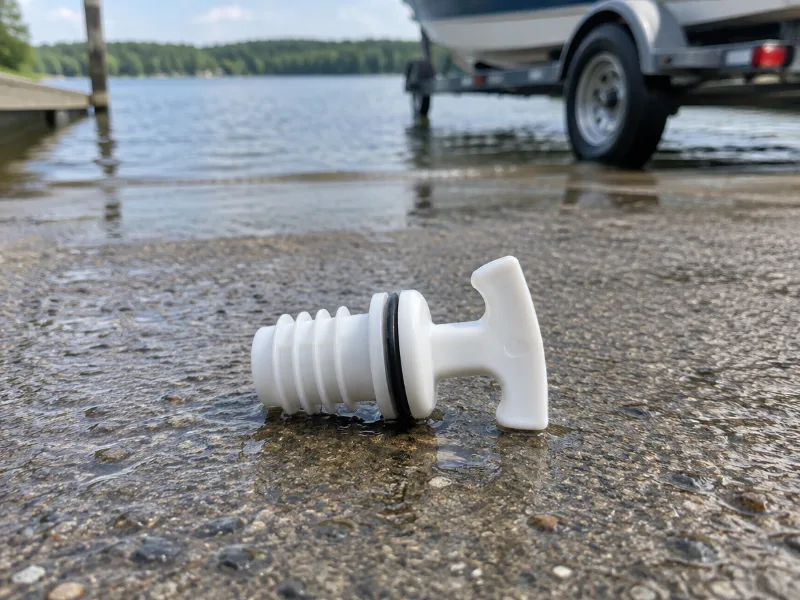 Illustration Bestseller Attwood 7524A7 snap-handle drain plug The forgotten drain plug is the classic ramp mistake. A spare in the glove box saves the day. View on Amazon
 -
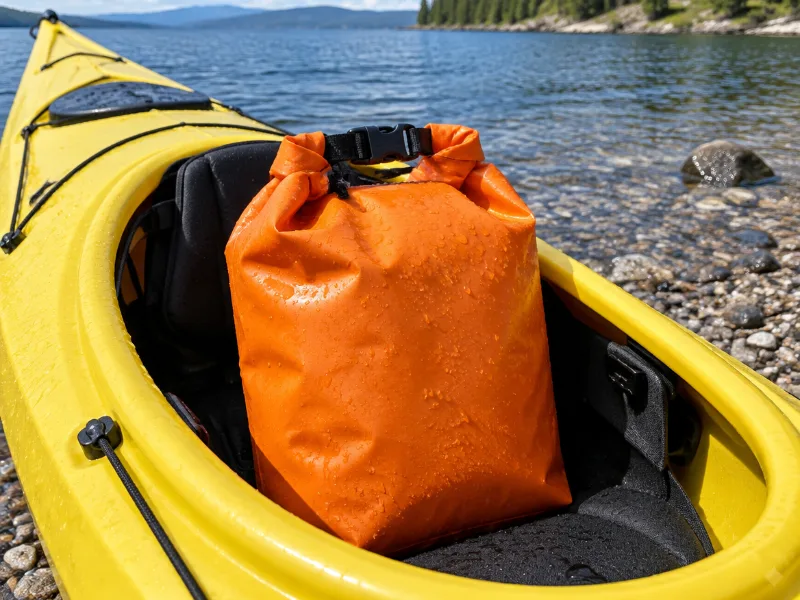 Illustration Bestseller Earth Pak waterproof roll-top dry bag Keys, phone and a dry shirt stay dry even if you tip over at the put-in. View on Amazon
We haven't tested these ourselves; we chose them by size and specs. As an Amazon Associate we earn from qualifying purchases, at no extra cost to you. Check the current price on Amazon.
Sources
- Connecticut regulations 26-16-1 (state boat launch areas)
- Tennessee rule 1660-01-01-.01 (ramps and launch docks)
- Wildlife Forever: Clean Drain Dry
- Minnesota Statutes 84D.10, Michigan invasive species: boaters and anglers, Wisconsin DNR
- South Dakota Game, Fish and Parks: Boat ramp courtesy